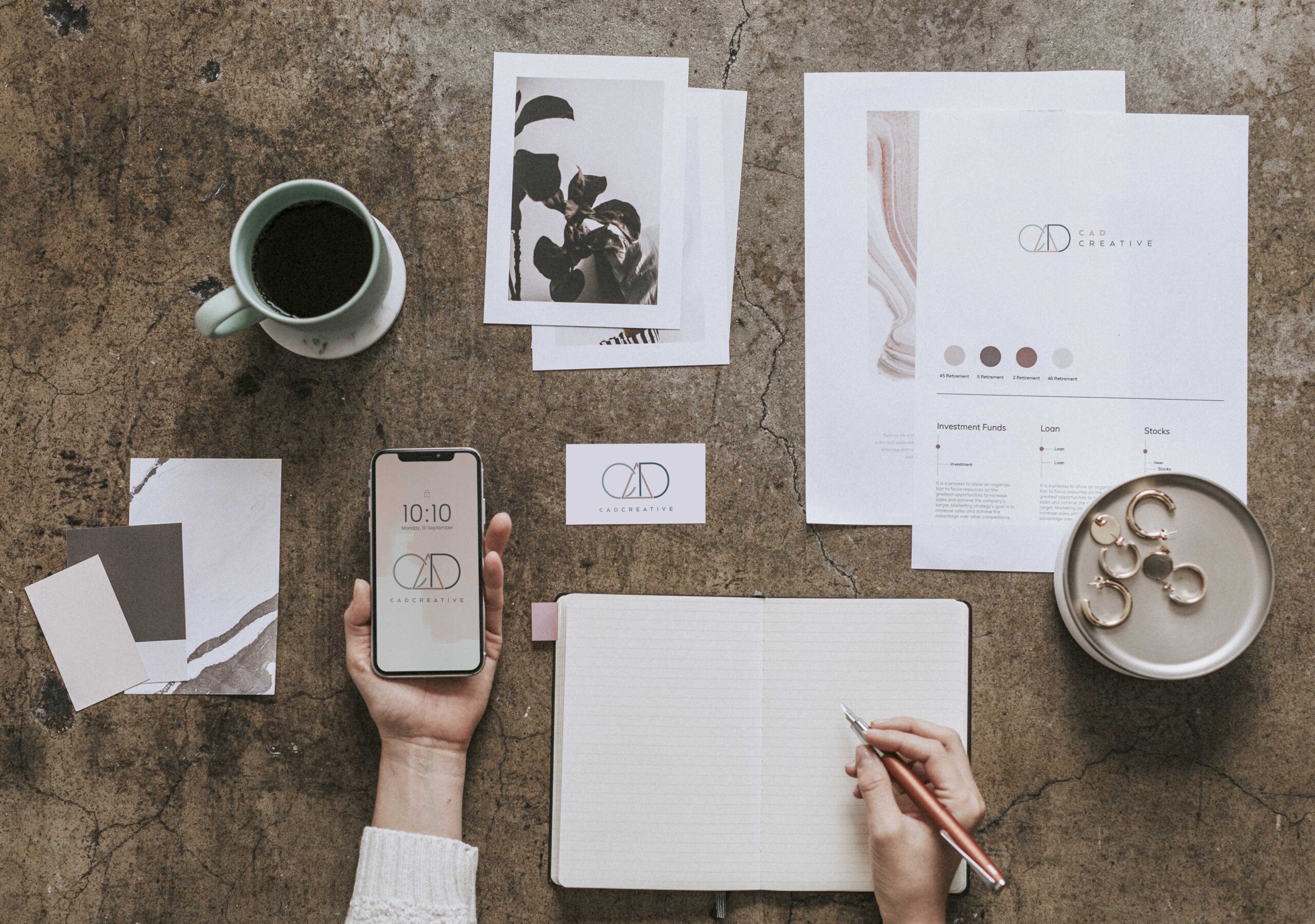
If you are thinking about starting a new brand or rebranding your business, you might be tempted to look at the top trends in logo design to see what is current and happening in the design industry.
However, as we know, true style is timeless but trends come and go! So although I love following and designing graphics to the latest trends, I also believe that crafting a timeless brand identity is one of the most important investments you can make in your business. It goes far beyond a logo or a colour scheme— it’s about creating an experience and a perception that resonates with your audience and endures the test of time… and is the key to longevity in a beautiful brand design!
Hitching your star to a fleeting trend could leave you wanting a complete rebrand when that trend suddenly falls out of favour and leaves your business visuals in the dust! Eek… Not the best business strategy obviously. However, by building a timeless brand with visuals that speaks authentically with your target audience, will usually work WITH current trends but can also transition and evolve to work with any new trends that appeal to your audience as they come up in the future. I think this is the key to side-stepping the hurdle of trend driven branding pitfalls.
So, here I’m giving you ten essential elements that form the foundation of a timeless brand identity, with practical tips to help you apply them to your business and branding vision.
Element 1.
A Distinctive yet Simple Logo
Your logo is the visual anchor and core element of your brand. A timeless logo is clean, adaptable, and instantly recognisable. Avoid overly complex designs or fleeting trends—focus instead on a design that represents your business’s core values and encapsulates the values and keywords associated with your offering.
A great logo is versatile. It should look equally effective in black and white as it does in colour, you can reverse it to work against different imagery or backgrounds and it should scale well from a small business card to a large billboard, from screen to print and beyond.
Pro Tip: When you work with a professional designer like me to create a logo that reflects the essence of your brand, I create a brand suite, it will include a primary logo, a secondary logo and also a brand mark so that you have different versions of the logo that will work in different scenarios and different media, which gives you versatility and tools to always represent your brand in the best possible way. You will be given multiple file formats and colour variations for flexibility and adaptability.
Element 2.
A Cohesive Colour Palette
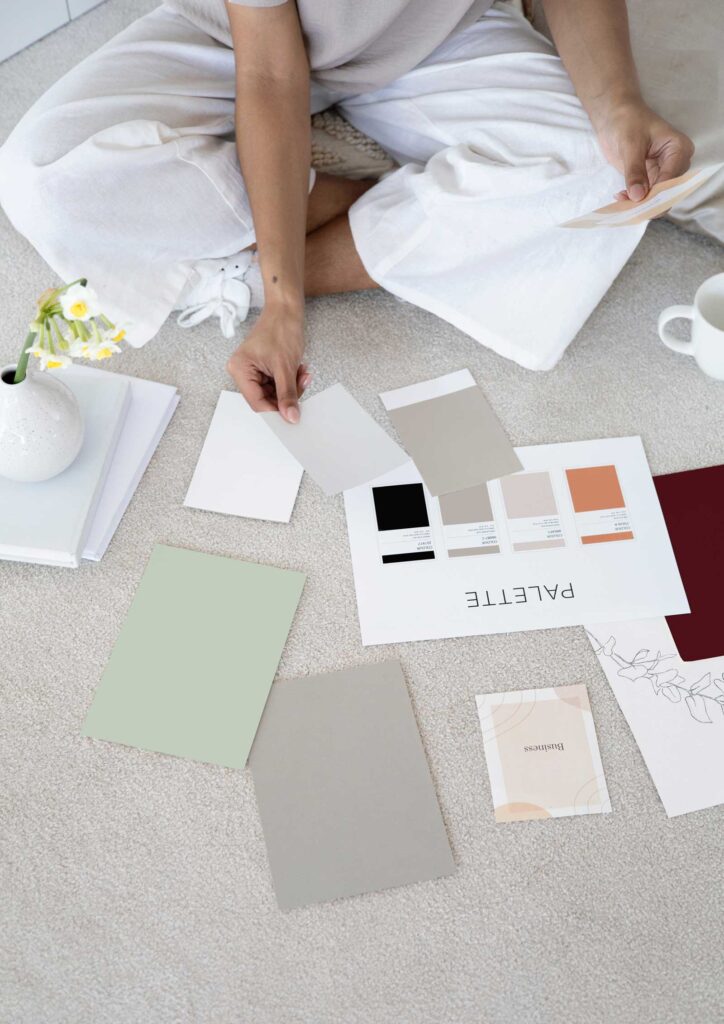
Colours influence emotions and help create an immediate connection with your audience. A cohesive palette should consist of primary colours, secondary accents, and neutrals that work together harmoniously.
Each colour in your palette should have a purpose. For instance:
- Primary colours: Represent the core of your brand (e.g., calm blues for trust, vibrant reds for energy).
- Accent colours: Add flair or highlight specific elements (e.g., call-to-action buttons).
- Neutral colours: Provide balance and ensure your design doesn’t feel overwhelming.
Pro Tip: Consider the timelessness of black, white, neutrals, greys and gold — all luxurious, classic, and adaptable and work well with bolder or feature colours or trends that you choose to incorporate.
Element 3.
Typography That Speaks Your Brand’s Language
Typography is more than a practical choice—it conveys your brand’s personality. Fonts can evoke professionalism, playfulness, or creativity, so it’s essential to choose fonts that align with your brand voice. Fonts can also be very trend driven, so thinking about the longevity and legibility of a font over the trend is key to choosing a font with longevity and timeless style.
When selecting fonts:
- Use a primary font for headings and logos.
- Choose a complementary secondary font for body text or subheadings.
- Consider legibility—simple, elegant fonts tend to age better than overly ornate designs.
Pro Tip: Limit your typography to 2-3 fonts for consistency. Look to typefaces like serif fonts for sophistication or sans-serifs for a modern edge and then use a script of hand-written font for flourishes and highlights only.
Element 4.
Consistent Imagery Style
Authentic imagery is a powerful way to communicate your brand story. Consistency in your visual content helps create recognition and trust by tying in to the values and mood that your brand represents. Think of the tone, lighting, and subject matter of your photos or illustrations.
For example:
- Use bright, clean imagery for brands that are modern and inviting.
- Opt for warm, moody tones for brands with a more intimate or luxurious vibe.
- Incorporate subtle overlays or filters to tie visuals to your brand’s colour palette.
Element 5.
A Memorable Brand Voice
Your brand voice is the way your business communicates. It reflects your personality and helps you build a connection with your audience. Get it right and you will speak the authentic language of your target audience.
Whether it’s friendly and approachable, confident and professional, or bold and innovative, consistency in your tone will reinforce your brand identity.
To define your brand voice:
- Consider your audience and what resonates with them.
- Create guidelines for language, style, and tone to ensure uniformity across all channels.
Example: If you want to convey approachability, use conversational phrases and avoid industry jargon.
Pro Tip: When I create a brand design, an important part of the discovery process is learning what language or voice works for that brand. Once you have developed a set of guidelines around your brand’s communication, it becomes so much easier to be authentic and engaging to your niche or target market.
Element 6.
A Strong Value Proposition
A value proposition is the promise you make to your customers. It’s the reason they choose you over competitors. This core message should be clear, compelling, and central to all your branding efforts. Having a professionally branded business will allow you to successfully communicate these values and your proposition. It can also add value to your business by increasing the perceived intrinsic value or professionalism of your brand, meaning the you can often increase prices because your brand is able to connect more to the value keys and answer the pain points of your customers.
Ask yourself:
- What unique benefits does your business offer?
- How does your product or service solve a problem for your audience?
Pro Tip: Keep your value proposition concise and customer-focused. Use it consistently in your tagline, website, and marketing materials.
Element 7.
Flexible Design System
A timeless brand is one that can evolve with the times and can play and riff with new trends and cultural cues as they arise and gain popularity. Flexibility in your design system ensures your branding remains consistent while adapting to new mediums, technologies or communication styles.
Key components of a flexible design system include:
- Templates for social media, print, and digital assets.
- Guidelines for adapting the brand to new trends without compromising its essence.
- Elements like submarks or alternate logos for various uses (e.g., a simplified version for small spaces).
Element 8.
A Signature Element
A signature element is a unique design feature that makes your brand instantly recognisable. This could be a graphic motif, a distinctive illustration style, a particular pattern or sometimes a key colour (think “Tiffany” blue for example). Finding the unique and recognisable brand element is something that any good brand designer will be looking for who designing your brand for you.
For example:
- A repeating geometric pattern in your packaging.
- A hand-drawn icon that appears on all materials.
- A signature graphic style for your social media posts.
- A key colour which runs across all your communication.
Pro Tip: Ensure your signature element aligns with your overall brand aesthetic and enhances its uniqueness.
Element 9.
Longevity Over Trends
While trends can bring short-term attention and click-bait, timeless brands focus on classic design principles. Clean lines, balanced layouts, and simple elements age much better than trend-heavy designs which will date themselves once the craze is oversaturated and over-done.
That’s not to say you should ignore trends entirely—just incorporate them sparingly and ensure they complement your foundational design which is based on an authentic and strategic visual communication style that speaks directly to your target audience.
Example: Think of brands like Chanel or LV that stay consistent while making subtle updates over the years.
Element 10.
Brand Guidelines for Consistency
A brand style guide is your brand’s rulebook and bible for all brand visuals , marketing campaigns and business communication strategy. By following a professionally developed brand guideline, it ensures every piece of content you create—from social media graphics to packaging—stays true to your identity.
It also takes the mental load and heavy lifting out of your communication, because the guidelines means no more guessing about how to say something or how to present yourself. It’s all bee laid out in a useful and clear guideline document which will take your step by step through different scenarios and how your brand should communicate and what messages to prioritise.
When I design a professional brand guidelines document I alway include:
- Logo usage rules (colours, sizing, spacing).
- Colour palette codes (RGB, CMYK, HEX).
- Colour combinations and variations.
- Typography combinations and font sizes.
- Tone of voice and messaging examples.
- Imagery and photography style preferences.
- Key messaging keywords, straplines and phrases.
Pro Tip: Share your brand guidelines with everyone who works on your brand to maintain consistency. It is not just a showcase of your brand design, but an important business asset which you can use to ensure that team members or third party stakeholders all learn how to communicate your. brand messaging in a consistent and clear way.
So, as you can see, creating a timeless brand identity is about understanding your business, your audience, and what makes you unique. Building a successful brand that will have longevity and timeless appeal is about distilling the values of your business into a set of branding assets which represent your message in an authentic and engaging way.
By focusing on the ten elements I have laid out, you’ll create a brand that not only resonates authentically with your customers but also stands the test of time.
Are you launching a new business and would like to to build your own timeless and stylish brand? Well I specialise in creating brands like this, so let’s create something extraordinary together. Just book a free consultation call with me today where we can discuss your requirement and come up with an exciting plan to launch your business to the next level!